Leek TherapyFounder work · Create · Convert · OperateSearch
Work
The work behind Revnix.
Campaigns, conversion experiences and the growth infrastructure underneath them, built to run as one commercial system.
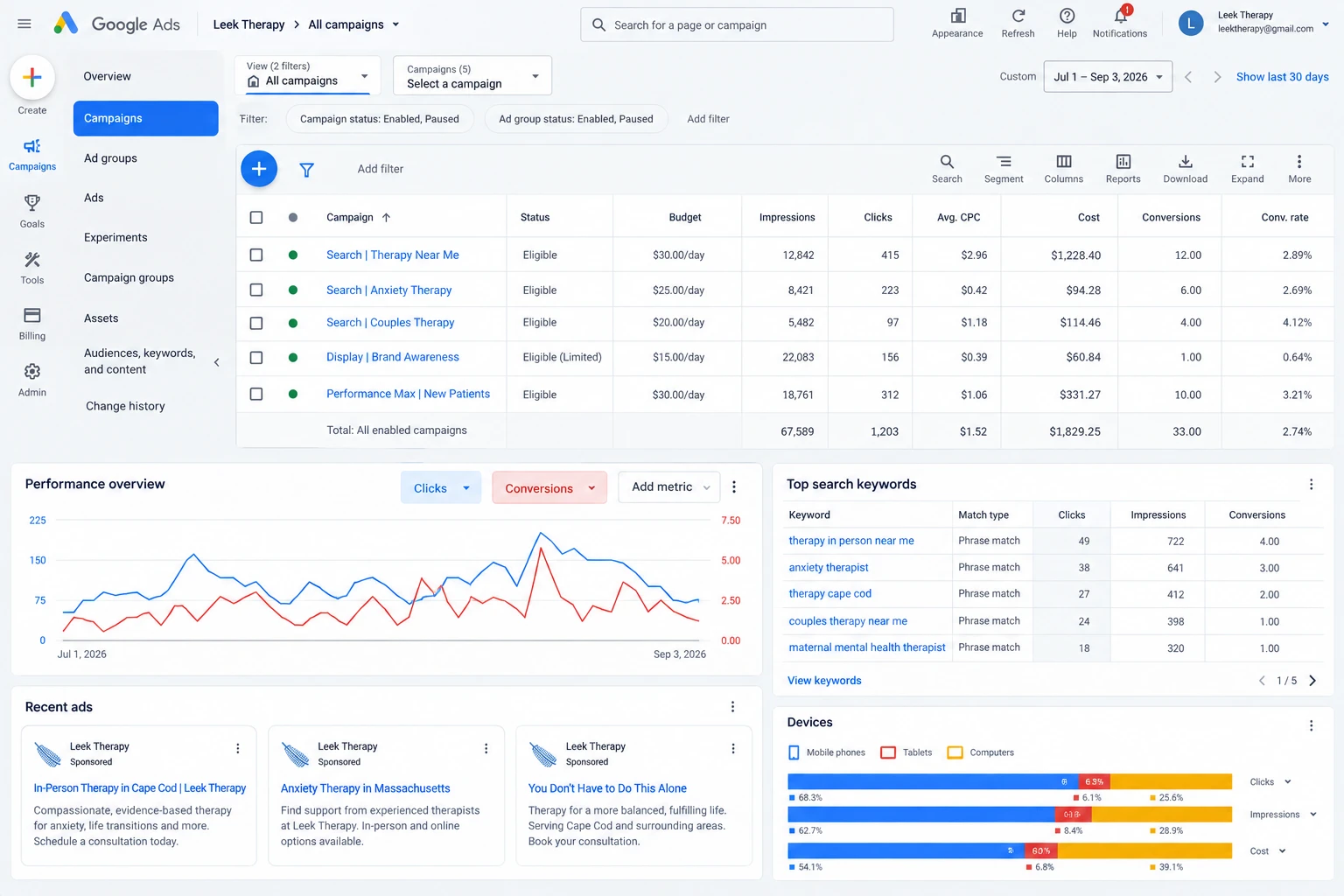
Leek Therapy’s search account, 1 July–3 September 2026. Founder work. Figures shown are platform reporting, not independently attributed business outcomes.
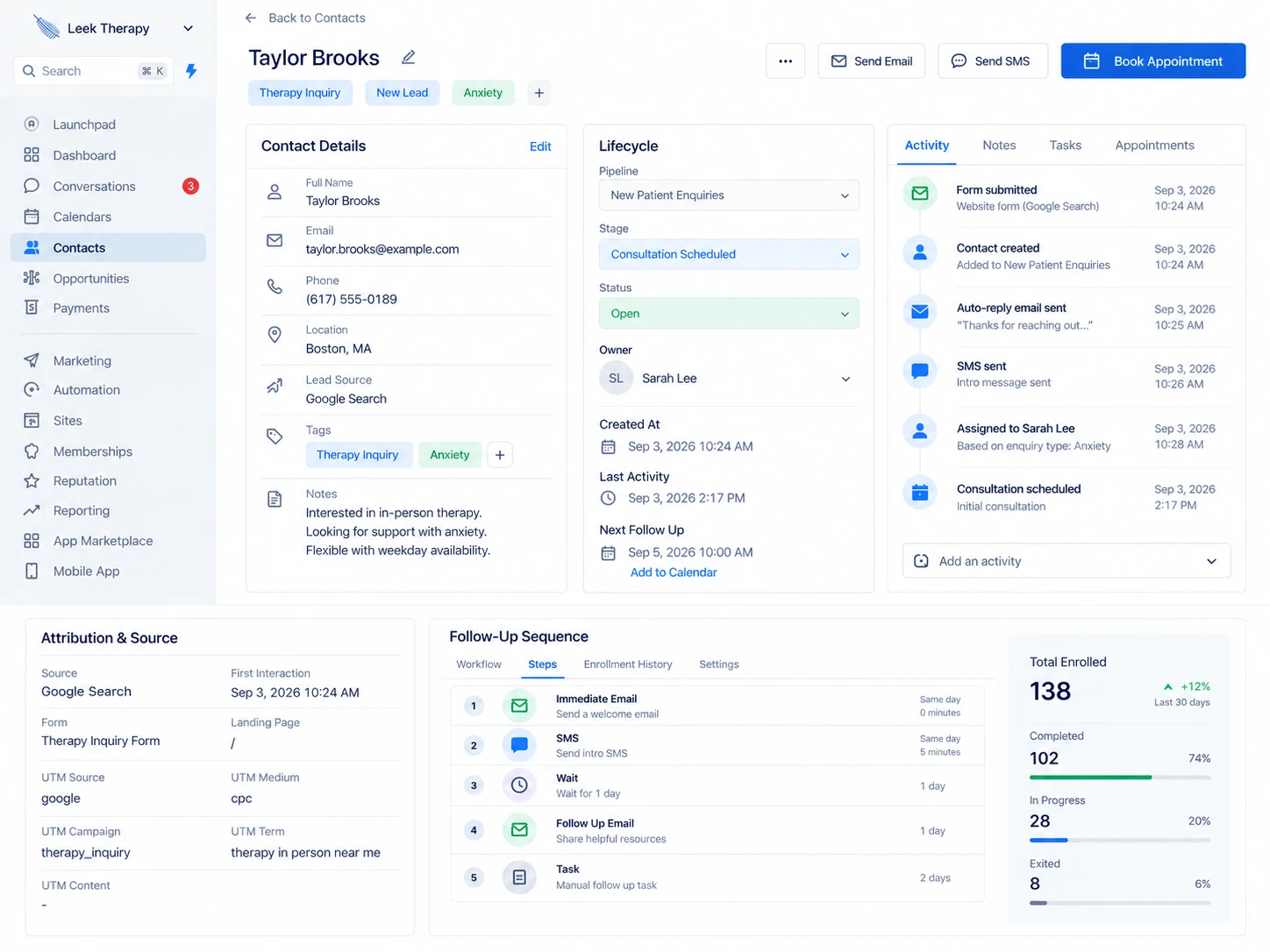
Lead source, written by the form and never retyped. Test contact.
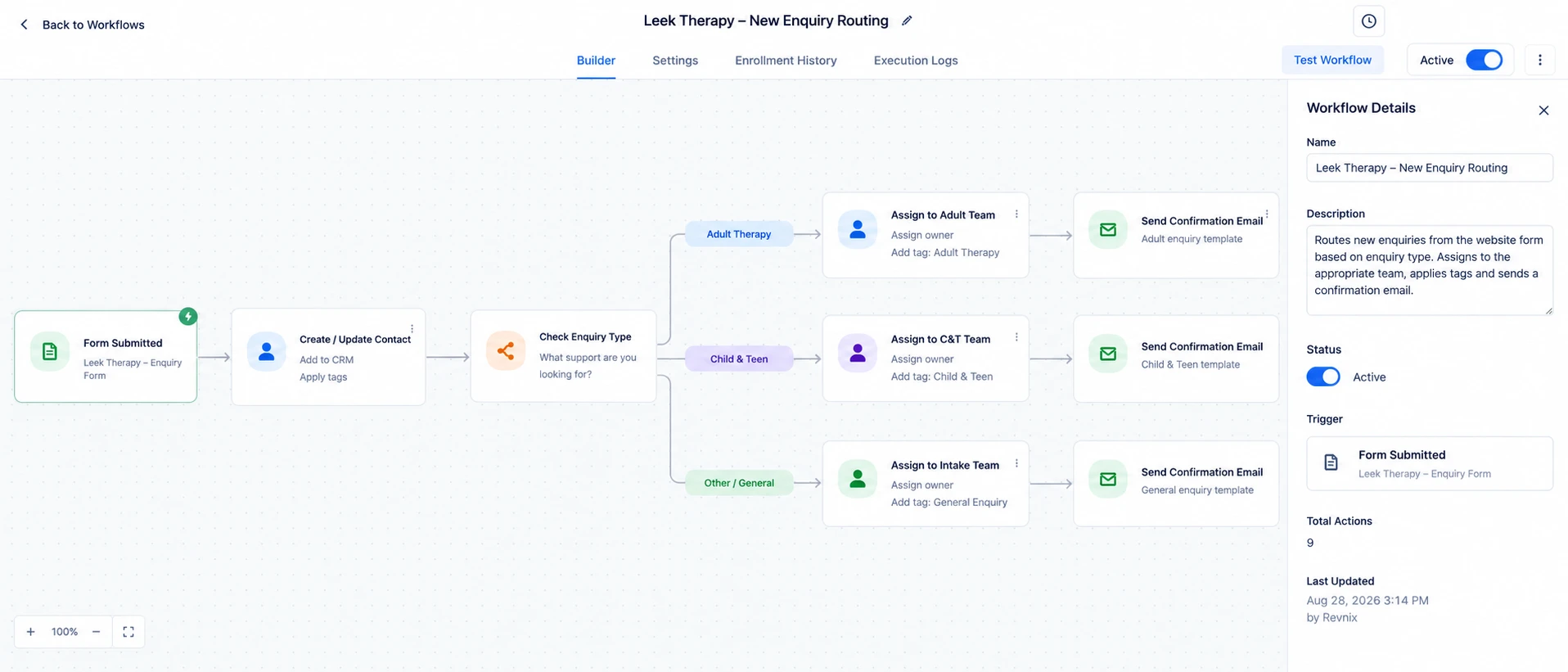
The rules that decide who replies, and how fast.
Every example on this page is labelled by who held the work: Revnix’s founder in his own roles, or Revnix building for itself. The person and the standard are the same.
Founder work · Daniyal Sheraz for Leek Therapy
Leek Therapy
Connecting acquisition, intake and follow-up.
A therapy practice taking most of its new clients from search, with enquiries landing in four systems that were never designed to meet each other.
The booking journey was not the end of the process.
Enquiries were arriving. What happened to them afterwards depended on who noticed, which inbox it landed in, and whether anyone re-typed it accurately. The work below follows one enquiry through the path Daniyal rebuilt, in the order it happens.
Search
The enquiry starts before anyone reaches the site.
Paid and organic were answering different questions, so the two channels competed for the same terms and disagreed on which ones mattered. They now answer the same intent, and the enquiry arrives already qualified for a specific service.
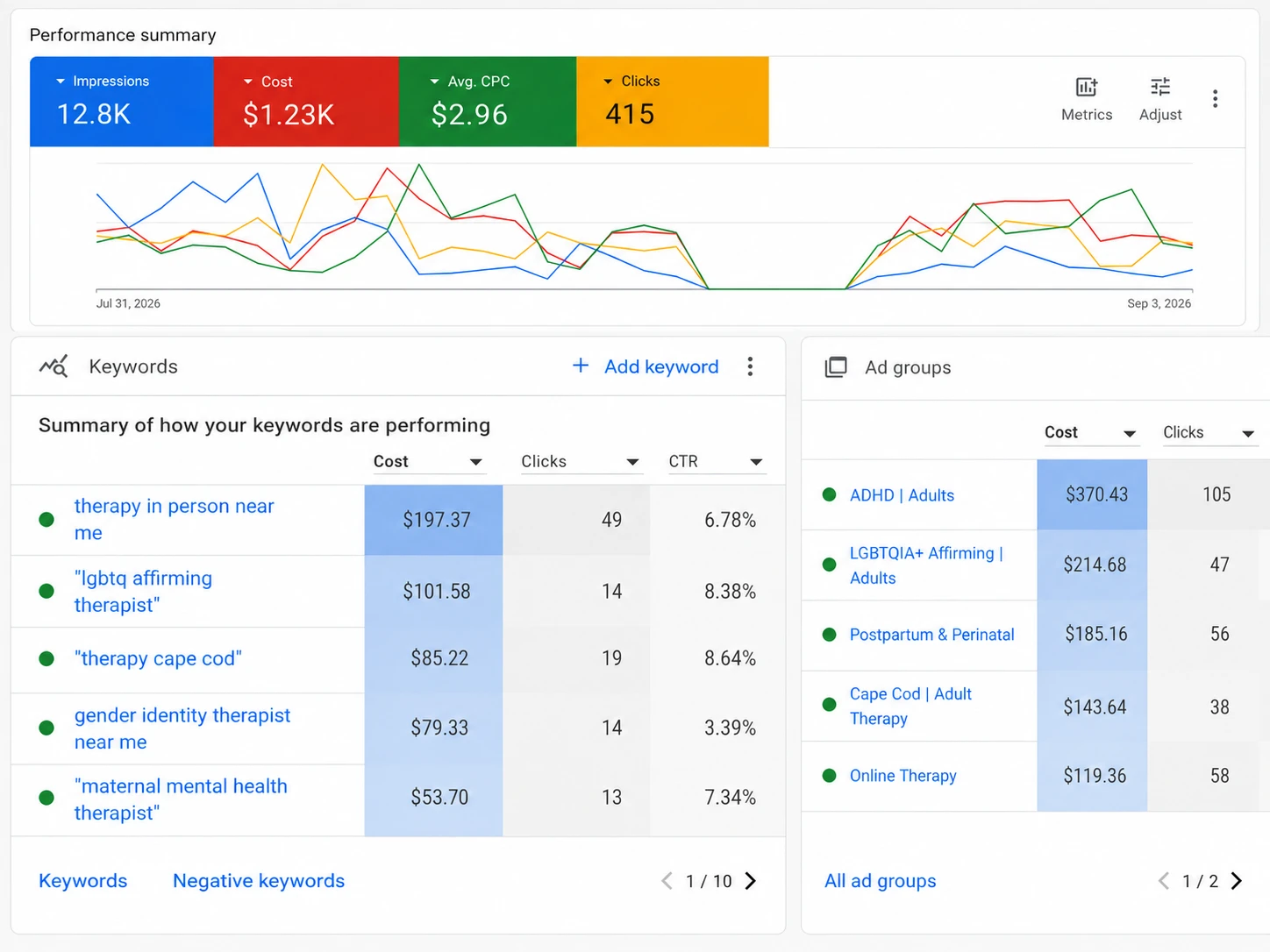
Search campaign and keyword reporting, 31 July–3 September 2026. Founder work.
Booking page
One page carries the decision.
What the service is, when it is available, what it costs to start and what happens after the form is sent. The page is the client's own design language, and it holds the whole decision rather than handing it to a phone call.
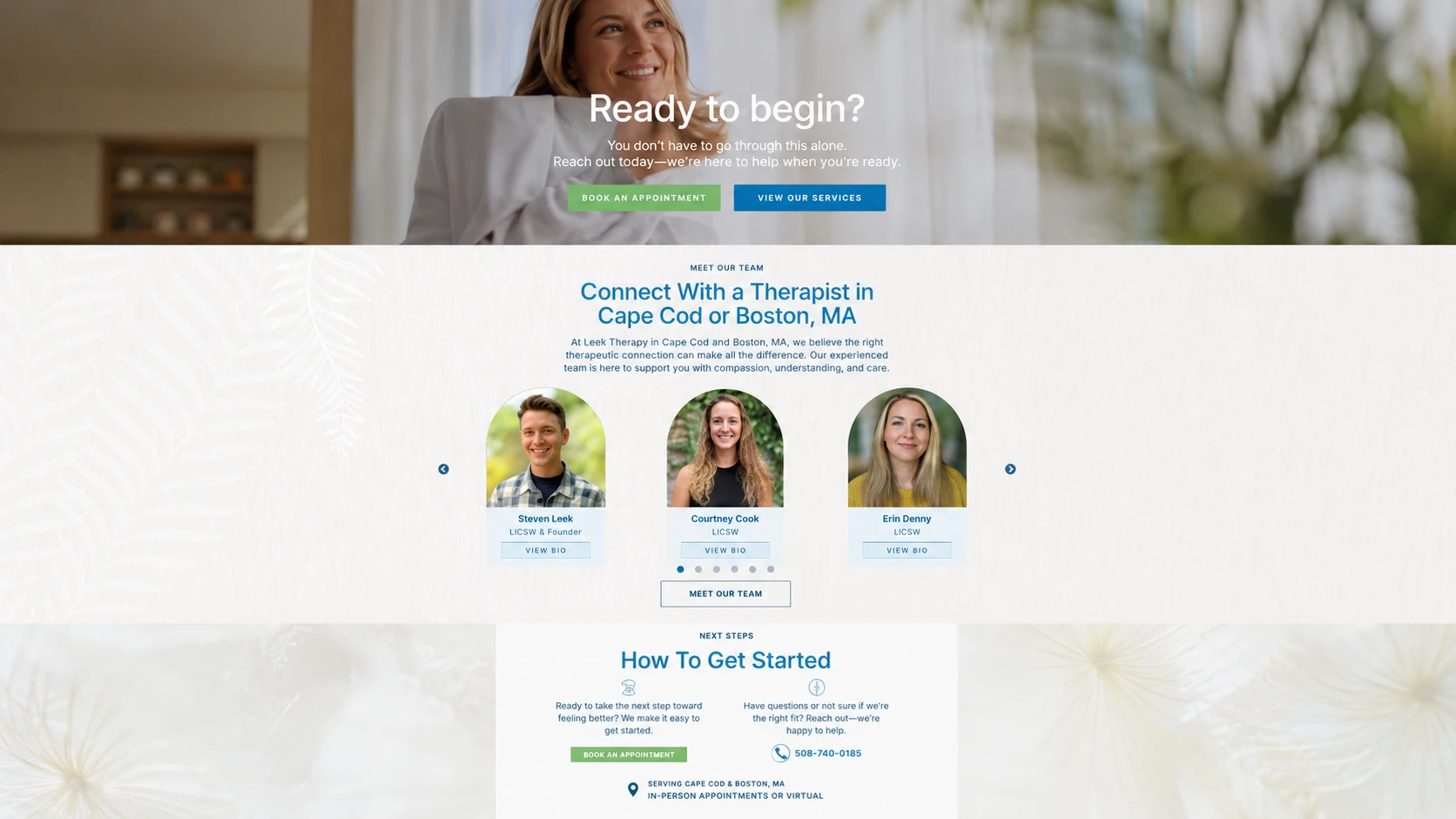
The supplied live-page capture: therapist profiles, appointment links and next steps.
Intake
The form asks only what the next step needs.
Service, availability, contact preference and consent. Every field exists because routing or the first reply uses it; the clinical detail belongs in the session, not in a web form.
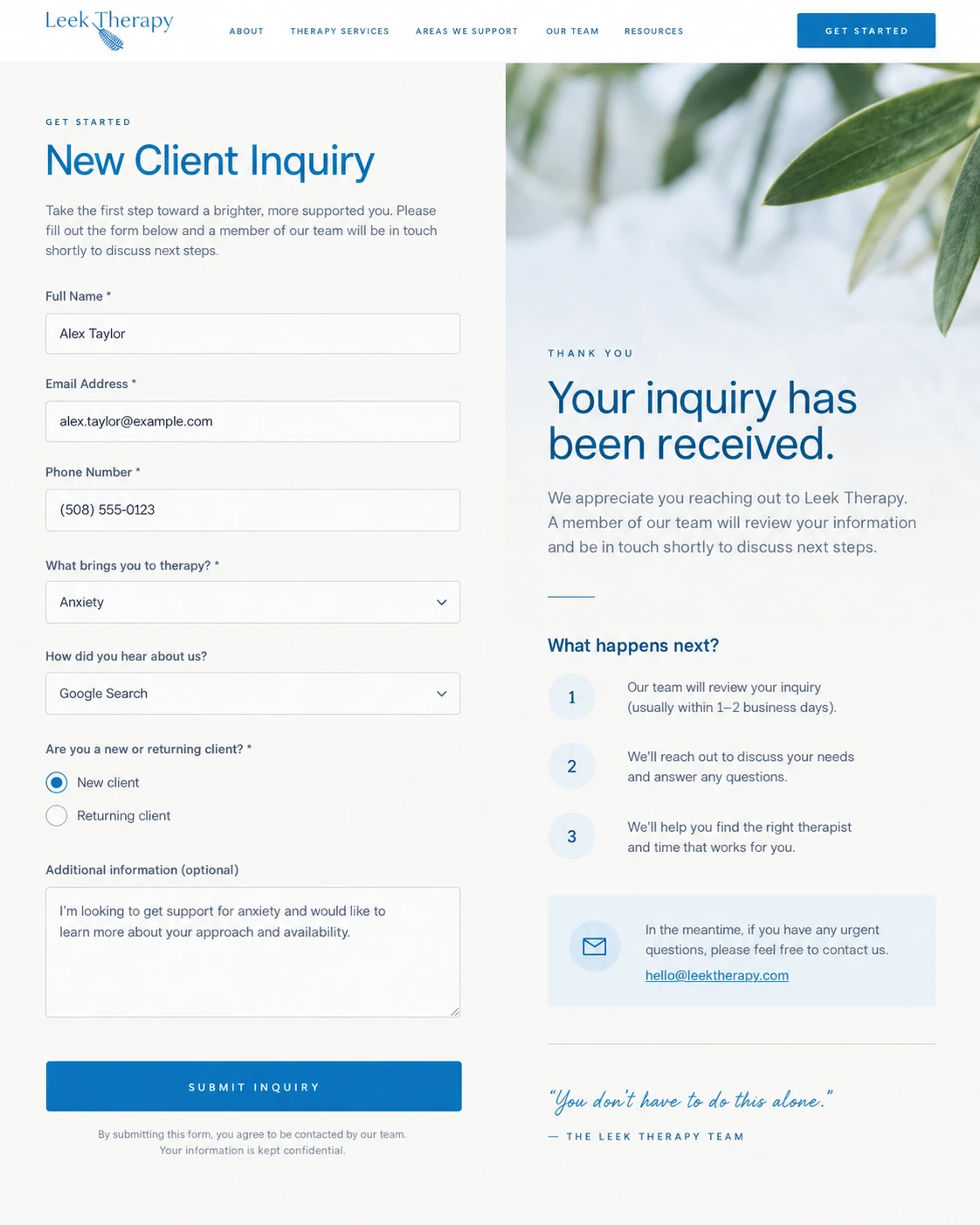
Enquiry received: the submitted state, shown with test contact details.
CRM
What happened after submission.
Before: a notification email, then someone re-entering the details into a spreadsheet, with the source lost on the way. Now the submission writes the record itself — service, site, source and consent — once, and nothing downstream has to guess.
The record written by the form, with source, ownership and activity history. Test contact.
Routing
The routing layer.
This is the step where enquiries were being lost. Assignment now runs on service and location, with a response clock attached and an escalation if the clock runs out.
The routing workflow: one trigger, enquiry-type branches, owner assignment and confirmation email.
Follow-up and measurement
What the team could finally see.
If no appointment is booked, a short sequence runs instead of the enquiry going quiet. And because the source stayed attached from the search onwards, the practice can read enquiries and booked appointments against the terms that produced them, in one view.
The attribution panel and follow-up sequence on the same test record.
What changed
Lead assignment happens without a person.
Service and location decide the owner. The response clock decides when it escalates.
Booking and CRM states are connected.
An appointment booked in one system is visible in the other without anyone reconciling the two.
Manual re-entry was removed.
The details are written once, at intake, in the fields the rest of the path depends on.
Source survives the whole path.
The follow-up and the report read the same field the search wrote, so channel decisions stop being guesswork.
Evidence across the system
The same work, seen by layer.
Demand, conversion and the infrastructure underneath, shown through the Leek Therapy work.
Create
Search and campaign structure, built around the service and the intent behind the enquiry.
Leek Therapy’s search account, 1 July–3 September 2026. Founder work. Figures shown are platform reporting, not independently attributed business outcomes.
Convert
The experience the click lands on, and the point where the decision is actually made.
The routing workflow: one trigger, enquiry-type branches, owner assignment and confirmation email.
All artifacts in this chapter: Leek Therapy, founder work. Contact records use test details.
Founder work · Earlier roles
Before Revnix.
Work completed before Revnix existed, included as evidence of the operating experience behind the company. Accountability was shared with the organisations it was done inside.
Adalfi
Growth Fellow
Founder work, prior role
What Daniyal owned
Lifecycle messaging for banking and lending funnels, including SMS and push campaigns, audience splits and sequencing.
Axon Learning
Chief Operating Officer
Founder work, prior role
What Daniyal owned
Go-to-market and the operations underneath it: how sessions were sold, how enquiries were handled, and the systems the team ran on day to day.
Earlier: Growth Analyst, Crumble Pakistan.
Revnix Lab · Internal build
Systems Revnix built for itself.
Internal builds, used in the business rather than demonstrated in a deck. They prove capability, not a client outcome, and they are labelled that way.
The revenue stack Revnix runs on itself
CRM architecture, lead routing, lifecycle automation and attribution, built for Revnix’s own enquiries.
Bring us the next problem.
If it crosses acquisition, conversion or the infrastructure underneath them, tell us what is happening. You get back what Revnix would own, and in what order.